The Art and Science Behind Custom Apparel Printing
I have been in the screen printing and embroidery business long enough to watch the industry shift from manual presses and hand-cut stencils to direct-to-film transfers and automated multicolor setups. Through all that change, one thing remains constant: the best custom apparel printing starts with understanding what the garment will actually carry. Not just the ink, but the story the wearer wants to tell. That is where the real craft lives.
When a client walks into our shop in Los Angeles, they often come with a napkin sketch or a rough logo file and a lot of hope. My job is to not just print that design, but to figure out the best way to bring it to life. That involves asking questions about fabric, color count, placement, and how the shirt will be worn. A band wants their merch to survive a sweaty summer tour. A local business needs their logo to look clean on a cotton twill cap. A school group needs 200 identical tees that won’t crack after a few washes. Each job pulls from the same set of tools, screen printing, DTF transfers, embroidery, but the approach changes every time.
Why Print Method Matters
Screen printing is still the workhorse of the industry. If you need a bold design with solid colors on a cotton shirt, screen printing gives you the best color saturation and durability. The ink sits on top of the fabric, so it stays bright longer. The downside is setup cost. Each color requires its own screen, and that takes time and labor. For small runs under a dozen shirts, screen printing can get expensive per piece. That is where DTF transfers and direct-to-garment printing come in. DTF lets you print full-color designs with gradients and fine details on a transfer film, then press it onto the shirt. It works on different fabric types and does not need the same setup time. The trade-off is that the print has a slightly different hand feel. Some people prefer the softer touch of a screen print. Others love the photographic detail that DTF can achieve.
Embroidery is a different beast entirely. It adds texture and a premium look that holds up to heavy washing. Polos, jackets, hats, and bags are natural fits. But embroidery has limitations on detail. Tiny text and intricate lines get lost in the thread. A good digitizer knows how to adjust the design so it stitches cleanly. I have seen a lot of customers bring in a logo with six-point type and expect it to read clearly on a left chest. It is my job to explain that embroidery has a minimum size threshold, and to suggest alternatives like a patch or a smaller thread count. That kind of honest guidance builds trust.
The Real Cost of Cheap Printing
I have also seen the other side. A customer comes in with a shirt they bought online for six dollars. The print is already peeling after one wash. They ask me if I can fix it. Usually, no. Once a low-quality print starts to crack or flake, there is no saving the shirt. The cure is to start fresh. That is frustrating for the customer, but it is a lesson in why production quality matters. Cheap inks, rushed curing, and low-grade garments all contribute to failure. In custom apparel printing, the garment itself is half the formula. A cheap blank will shrink, fade, and pill regardless of how well you print on it. I always recommend buying from reputable brands, Gildan, Bella+Canvas, Comfort Colors, and ordering pre-shrunk options when possible.
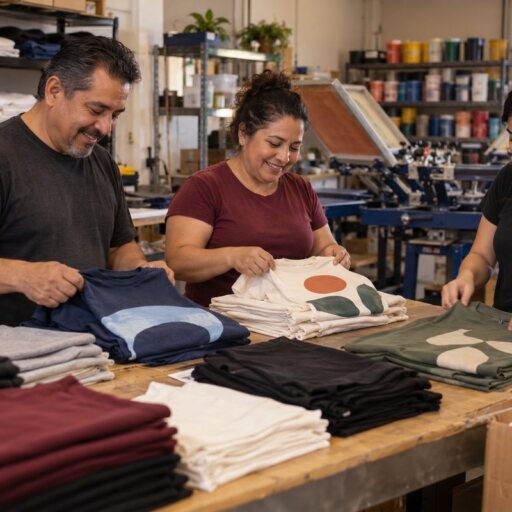
One of the most satisfying parts of my job is helping a first-time buyer understand the process. They come in nervous, unsure what to ask. I show them a few sample prints on different fabrics, explain the difference between plastisol and water-based inks, and let them feel the difference. That is the value of working with a print shop that does everything in-house. We can pull samples right off the press, show you the exact color match, and make adjustments on the spot. No waiting on a factory overseas. No minimum order of 500 pieces. Just a small team that cares whether the shirt looks right.
This is where the phrase custom apparel printing Custom Shirt Printing becomes more than a tagline. It describes a process that combines technical skill with creative problem solving. Every job teaches me something new. A few months ago, a customer wanted a metallic gold design on a dark navy hoodie. Standard screen printing ink would not pop the way they wanted. So we used a special metallic base and topped it with a translucent gold. The result had a shine that shifted in the light. That is not something a catalog can offer. That is real, hands-on custom work.
How to Approach Your First Order
If you are thinking about getting custom shirts made, here is a practical checklist that helps most people avoid common mistakes:

- Start with a high-resolution vector file of your logo or design. Raster images with low resolution will look fuzzy when printed large.
- Know your garment. Cotton breathes and prints well. Polyester needs special inks or lower temperatures to avoid dye migration.
- Think about color count. Every screen print color adds cost. If your design has five colors, can it be simplified to two or three without losing the identity?
- Order a sample before committing to a bulk run. It costs a little more upfront, but it saves you from 200 shirts that do not match your vision.
- Ask about turnaround time. In-house production is faster than most people expect, but rush orders still need to fit into the queue.
I tell every customer the same thing: the best custom apparel printing comes from a partnership. You bring the idea. We bring the technique. Together we figure out the best way to make it happen. That might mean adjusting the colors for better contrast, choosing a different shirt style that drapes better, or recommending a print method that fits your budget. The goal is not to sell you the most expensive option. The goal is to produce something you are proud to wear and that holds up over time.
Why Local Shops Still Matter
There is a reason people keep coming back to a family-owned shop like Custom Shirt Printing. It is not just about price. It is about accountability. When you order online from a giant fulfillment company, you might get a decent product, but you have no say in the process. If something goes wrong, you are stuck on a chat line with someone who has never touched a screen press. When you work with a local shop, you can walk in the door and talk to the person who will actually print your order. That matters when the design is complex or the deadline is tight.
I remember a rush order for a nonprofit event. They needed 150 shirts in five days. The design had eight colors, which normally would require a long setup. We simplified the palette, used a simulated process that tricked the eye into seeing more colors than we printed, and ran the job in two days. The shirts looked great, and the customer was relieved. That kind of flexibility only works when you have an in-house team that can adapt on the fly.
Another example: a local band wanted a distressed vintage look on their merch. They brought in a reference photo of an old concert tee from the 80s. We used a discharge ink that removes the dye from the fabric and leaves a softer print that feels like part of the shirt. That effect cannot be duplicated with a standard plastisol print. It took a few tests to get the formula right, but the result was exactly what they wanted. That is the difference between printing shirts and creating custom apparel printing Custom Shirt Printing that tells a story.

Looking Ahead
The industry keeps evolving. Water-based inks are becoming more popular for their soft hand and environmental benefits. DTF technology is improving every year, making it easier to print small batches with high detail. Embroidery machines now do 3D puff and intricate patterns that were impossible a decade ago. But the fundamentals stay the same. You still need good artwork, the right garment, and a printer who knows how to match the method to the job. That is what we do at Custom Shirt Printing, and it is why our customers keep coming back.
If you are reading this and thinking about starting your own line, or just need shirts for an event, take the time to understand the options. Ask questions. Look at samples. And do not be afraid to invest in quality. A great shirt gets worn, washed, and worn again. It becomes a walking billboard for your brand or your cause. That kind of longevity starts with good decisions at the print shop. Whether you choose screen printing, DTF, or embroidery, the principles are the same: prepare your artwork, choose your garment wisely, and work with a partner who treats your project like their own.
 Facebook
 Instagram
Ends · GETCUSTOMAPPARELPRINTINGEDGE